
Running one blog well is hard enough. Running five, twenty, or fifty of them — each with its own voice, keywords, and CMS — is a different problem entirely. This is the exact situation facing digital agencies, multi-location business owners, and portfolio eCommerce operators heading into 2026: they know content marketing drives organic traffic, but the old model of hiring a writer per site, or per client, simply doesn't scale.
That's where AI content software for multiple websites comes in. Instead of coordinating freelance writers, editors, and publishing schedules across a dozen different logins, a single platform can research keywords, draft articles, and publish them directly into each site's CMS — automatically, every day. This article breaks down what that actually looks like in practice, what to watch out for, and how to evaluate the tools on the market.
Why Managing Content Across Multiple Sites Is So Hard
Anyone who has tried to keep three or more blogs updated knows the friction points. It isn't just "writing more words" — it's the operational overhead that multiplies with every additional site.
Consider what a typical agency account manager juggles for just one client:
- Keyword research specific to that client's niche and location
- A content calendar that doesn't repeat topics or cannibalize existing pages
- A writer who understands the brand voice
- An editor to check facts, formatting, and tone
- Someone to log into WordPress, Webflow, Wix, Shopify, Ghost, or Framer and actually publish
- Image sourcing and alt text
- Internal linking back to service pages or product collections
Now multiply that by ten, twenty, or fifty client sites, each on a different CMS, each with a different publishing cadence. The coordination cost alone can eat an agency's margins before a single blog post goes live. According to HubSpot's state of marketing research, companies that blog consistently generate significantly more leads than those that publish sporadically — but "consistently" is precisely what breaks down when content production depends on manual human bandwidth across many properties.
Small business owners with a single site feel a lighter version of this same pain: they know they should be publishing weekly, but between running the business and everything else, the blog becomes the thing that never gets done.
What AI Content Software for Multiple Websites Actually Does
At its core, this category of software automates the entire content pipeline — not just the writing. The best platforms handle four distinct stages:
- Keyword and topic discovery — identifying what a specific site's audience is actually searching for, based on its niche, competitors, and existing content gaps.
- Content calendar planning — scheduling topics so posts build topical authority over time instead of being random, disconnected articles.
- Article drafting — producing full-length, readable articles that reflect the site's industry and tone, not generic filler.
- Direct publishing — pushing the finished article straight into the client's CMS, formatted and live, without a human copying and pasting HTML or Markdown.
FrontRank was built specifically around that fourth step, because it's the one most "AI writing tools" ignore. Plenty of software will generate a draft; very few will actually get it published, formatted correctly, and scheduled across many sites without manual intervention. With frontrank.com, a user connects their CMS in one click — no API keys, no developer setup — and the system builds the calendar, generates the keywords, writes the articles, and publishes them automatically on a daily schedule.
The Real Cost Difference: Writers vs. Agencies vs. AI Software
For any business owner or agency weighing their options, the cost comparison usually comes down to three paths: hire in-house writers, outsource to an SEO agency, or adopt AI content software. Here's how those typically compare when scaled across multiple websites.
| Approach | Approx. Monthly Cost (per site) | Scales to 10+ Sites? | Typical Publishing Speed |
|---|---|---|---|
| In-house writer | $3,000–$6,000 salary-equivalent | Poorly — requires hiring more writers | 2–8 posts/month |
| SEO agency retainer | $1,500–$5,000 per client | Expensive at scale | 4–8 posts/month |
| AI content software (multi-site) | $50–$300 per site | Built for this | Daily, if desired |
| No content strategy | $0 | N/A | 0 posts/month |
The numbers make the case plainly: once a business or agency needs to maintain more than two or three active blogs, the per-site economics of human writers or agency retainers become difficult to justify. This is precisely the gap that AI content software for multiple websites is designed to close — not by replacing strategy, but by replacing the repetitive production labor that strategy depends on.
This doesn't mean quality is automatically sacrificed. Modern AI writing systems, when paired with proper keyword research and SEO structure, produce articles that are genuinely useful to readers and well-optimized for search engines — a point echoed in Google's own guidance on helpful content, which emphasizes value to the reader over how the content was produced.
Why CMS Compatibility Matters More Than People Think
A tool that writes brilliant articles is only half useful if someone still has to manually move that content into the actual website. This is the step that quietly consumes the most time in multi-site operations, and it's also where most "AI writer" tools stop short.
Agencies in particular deal with a messy reality: one client is on Shopify, another on WordPress, a third insists on Webflow, and a fourth just migrated to Framer. Each CMS has its own publishing quirks — image handling, meta fields, URL structures, category taxonomies. Manually re-formatting content for each platform is tedious and error-prone.
Software built for multiple websites needs to handle this natively. FrontRank, for example, supports direct publishing into WordPress, Webflow, Wix, Shopify, Ghost, and Framer, which covers the overwhelming majority of CMS platforms agencies and small businesses actually use. Because the connection happens in one click with no API keys or copy-paste, the same workflow applies whether you're managing one site or fifty — the publishing step simply isn't a bottleneck anymore.
Evaluating Platforms: What to Actually Look For
Not all "AI content software" is built with multi-site management in mind. Many tools were designed for a single blogger writing about one topic, then retrofitted with a "teams" feature. Before committing, it's worth checking for the following:
- Native multi-CMS publishing — not just export-to-HTML, but actual direct publishing into the platforms your clients use.
- Per-site keyword research — each website should get its own calendar based on its own niche and competitors, not a shared generic topic list.
- Daily or scheduled automation — the system should run on autopilot, not require someone to click "generate" every morning.
- Brand voice consistency — especially critical for agencies managing distinct client identities.
- Transparent per-site pricing — costs should scale predictably as you add sites, not spike unpredictably.
- GEO-readiness — content structured so AI assistants like ChatGPT, Perplexity, and Google's AI Overviews can cite it, not just traditional search engines.
That last point deserves attention. As AI-powered answer engines become a larger share of how people find information, being "cited" by an assistant is becoming as valuable as ranking on page one. Research from Search Engine Journal and other industry publications has repeatedly noted that well-structured, factual, clearly organized content performs better both in classic search rankings and in AI-generated answers. Software that treats SEO and GEO as the same discipline — rather than bolting GEO on as an afterthought — is better positioned for where search is actually heading in 2026.
How Agencies Specifically Benefit From Centralized AI Content Tools
Agencies occupy a unique position in this conversation: they aren't just managing their own content, they're managing content as a deliverable for paying clients, often across wildly different industries. A law firm client needs a completely different tone and topic set than a landscaping client or an eCommerce skincare brand.
For agencies, the value of AI content software for multiple websites shows up in a few concrete ways:
- Margin protection. Content retainers become more profitable when production costs drop, without reducing the price charged to the client.
- Faster onboarding. New clients can have a working content calendar and first published articles within days, not weeks.
- Consistency at scale. Every client site gets the same quality bar, rather than quality varying by which freelancer happened to be available that month.
- Reduced account manager overhead. Nobody has to chase down a writer, review a draft, format it, and manually publish it — the system handles the full loop.
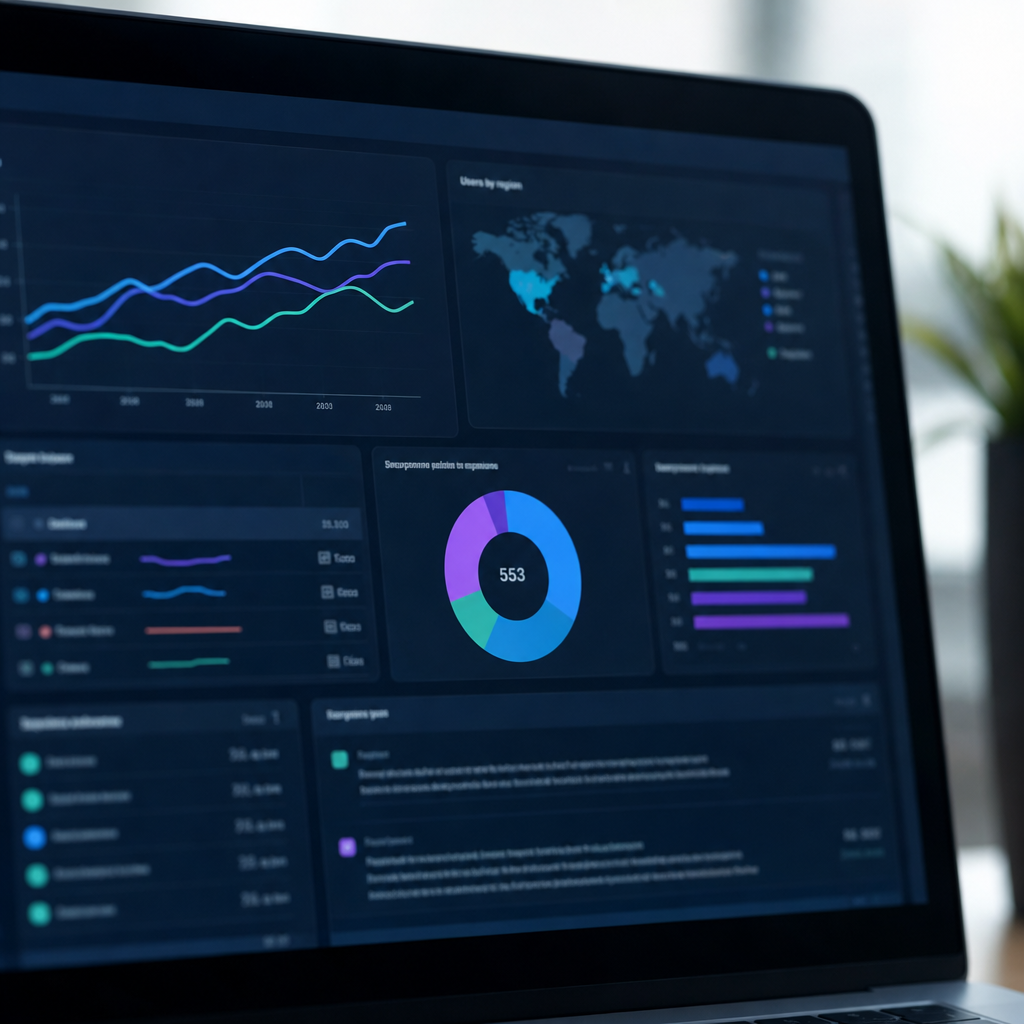
- Easier reporting. A single dashboard view across all client sites makes it simpler to show stakeholders what's been published and what's scheduled next.
This mirrors a broader shift happening across service industries, where software is increasingly expected to absorb repetitive operational work so human teams can focus on strategy and client relationships. It's the same logic that has made automation tools indispensable in adjacent fields — for instance, teams managing accountability and habit tracking for groups of people have turned to platforms like alcogoal.app specifically because manual, one-by-one tracking doesn't scale past a handful of participants. The pattern is consistent: wherever a task needs to be repeated accurately across many instances, dedicated software outperforms manual effort every time.

What a Week Looks Like With Multi-Site AI Content Running
It's useful to picture the actual operational difference. Here's a simplified comparison of a week in content production, before and after adopting AI content software across multiple sites.
| Task | Manual Process (5 sites) | With AI Content Software (5 sites) |
|---|---|---|
| Keyword research | 4–6 hours across all sites | Automated, ongoing |
| Writing drafts | 10–15 hours (if outsourced, days of turnaround) | Generated automatically |
| Editing/formatting | 3–5 hours | Minimal to none |
| Publishing to each CMS | 2–3 hours | Automatic, same day |
| Total hands-on time | 20+ hours/week | Near zero, with oversight only |
The time savings compound quickly once you're past two or three sites, which is exactly why this category of software has grown so much interest among agencies and multi-location businesses heading into 2026. It's not about removing human judgment from the process — it's about removing the repetitive labor that was never a good use of a skilled strategist's time in the first place.
Common Mistakes When Scaling Content Across Multiple Sites
Even with the right software, businesses and agencies can undermine their own results if they fall into familiar traps:
- Treating every site identically. Each website still needs its own keyword strategy based on its actual audience and competitors, not a copy-pasted topic list.
- Ignoring publishing cadence. Search engines and AI assistants both reward consistency; sporadic bursts of content followed by silence rarely build authority.
- Skipping internal linking. Articles that don't link to product pages, service pages, or other relevant posts leave value on the table.
- Forgetting about existing content. New articles should complement, not duplicate, what's already published on a site.
- Assuming "set and forget" means "never check in." Even automated systems benefit from occasional review of performance and topic direction.
Avoiding these pitfalls is largely a matter of choosing software that was designed with multi-site operations in mind from the start, rather than a single-site tool stretched to cover more properties than it was built for.
Getting Started Without Disrupting What Already Works
For a business owner or agency considering this shift, the transition doesn't need to be dramatic. Most platforms, including FrontRank, are designed so that connecting an existing CMS doesn't touch what's already published — it simply adds a new, automated stream of fresh content on top of the existing site. There's no migration, no rebuild, and no risk to current rankings.
The practical first step is usually:
- Connect the CMS for each website (one click, no developer needed).
- Review the proposed content calendar and keyword targets.
- Let the system begin publishing on its chosen schedule.
- Periodically review performance and adjust focus areas as the business evolves.
For agencies, this can be rolled out client by client, starting with the accounts that most urgently need a content refresh, then expanding across the full roster once the workflow proves itself.
Closing Thoughts
Content is no longer optional for businesses that want to be found in organic search or cited by AI assistants — but the old way of producing it, one hired writer and one site at a time, simply doesn't hold up once you're responsible for more than a handful of properties. AI content software for multiple websites exists precisely to solve that scaling problem: automating keyword research, calendar planning, writing, and publishing so that quality and consistency don't depend on how many hours a human has left in the week.
FrontRank was built around this exact need. By connecting directly to WordPress, Webflow, Wix, Shopify, Ghost, or Framer in one click — no API keys, no copy-paste, no writers to hire — frontrank.com gives small business owners, eCommerce stores, and agencies managing multiple client sites a working blog that publishes daily, ranks in Google, and gets cited by AI assistants, all without adding headcount.
Article written by FrontRank