
Planning content used to mean spreadsheets, sticky notes, and a lot of guesswork. Today, an SEO content calendar generator replaces that manual process with automated, data-driven publishing schedules that account for both traditional search engines and the growing world of AI-powered answer engines like ChatGPT, Claude, and Gemini. For founders, marketers, and agencies stretched thin on time and resources, this shift isn't just convenient — it's becoming essential for staying competitive.
In this guide, we'll break down what an SEO content calendar generator actually does, why it matters more than ever in 2026, and how tools like FrontRank are automating the entire process from keyword research to publishing.
What Is an SEO Content Calendar Generator?
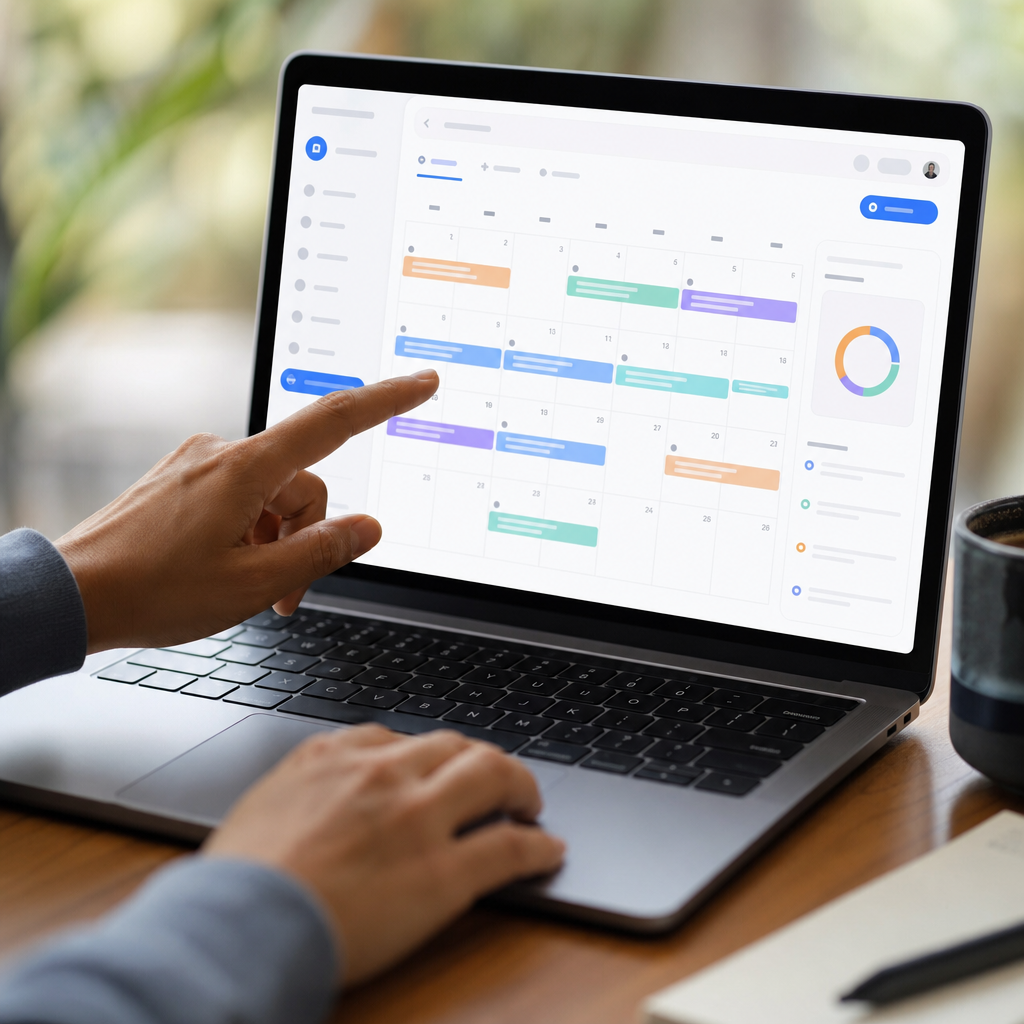
An SEO content calendar generator is a software tool that automatically builds a publishing schedule based on keyword research, search intent, competitive analysis, and business goals. Instead of manually brainstorming blog topics or hiring a strategist to map out a quarter's worth of content, the software does the heavy lifting.
At its core, a good generator will:
- Identify high-value keywords with realistic ranking potential
- Cluster related topics into content pillars
- Assign publishing dates based on priority and seasonality
- Recommend content formats (how-to guides, comparisons, listicles, etc.)
- Adjust the plan as new data comes in
Modern versions go a step further. Because AI assistants are now a major source of discovery, the best generators also optimize for Generative Engine Optimization (GEO) — structuring content so it gets cited in AI-generated answers, not just ranked on a search results page.
Why Manual Content Planning Falls Short
Most businesses still plan content the old-fashioned way: a marketer opens a spreadsheet, does some keyword research in a tool like Ahrefs or Semrush, and manually schedules a handful of posts per month. This approach has real limitations.
- It doesn't scale. Publishing one or two articles a week is rarely enough to compete in crowded niches.
- It's reactive, not strategic. Teams often chase trending topics instead of building topical authority systematically.
- It ignores AI search entirely. Most manual calendars are built around Google keyword volume alone, with no consideration for how content appears in AI Overviews or chatbot responses.
- It's time-intensive. Research, writing, editing, and publishing consume hours that small teams simply don't have.
According to Search Engine Journal, consistent publishing frequency is one of the strongest correlating factors with organic growth — yet most small businesses publish fewer than four articles per month. The gap between what's needed and what's realistic with manual processes is exactly where automation steps in.
How AI Content Calendar Tools Actually Work
Automated content calendar generators typically follow a structured pipeline. While implementations vary, the general workflow looks like this:
- Site audit – The tool crawls your website to understand existing content, technical SEO health, and gaps in coverage.
- Keyword and topic discovery – AI models analyze search demand, competitor content, and semantic relationships to surface keyword opportunities.
- Topic clustering – Related keywords are grouped into pillar and cluster structures to build topical authority.
- Calendar generation – Topics are scheduled based on priority, difficulty, and business goals (e.g., product launches, seasonal demand).
- Content generation – Many platforms, including FrontRank, generate the actual articles — not just the topic list — optimized for both search engines and AI crawlers.
- Publishing and backlinking – Content is published automatically, often with internal links and backlinks built in to strengthen authority signals.
This is a fundamentally different model than traditional content marketing software, which usually stops at planning and leaves the writing and publishing to humans.
SEO vs. GEO: Why Your Calendar Needs to Cover Both
Search behavior is splitting into two paths: traditional search engines and AI-powered assistants. A content calendar built only for Google keyword rankings misses half the picture in 2026.
| Factor | Traditional SEO | GEO (AI Search Optimization) |
|---|---|---|
| Primary goal | Rank in Google's top 10 results | Get cited in AI-generated answers |
| Key signals | Backlinks, keyword density, page speed | Clear structure, factual accuracy, citations |
| Content format | Long-form, keyword-optimized pages | Concise, well-structured, quotable snippets |
| Discovery surface | Search engine results pages | ChatGPT, Claude, Gemini, Perplexity, AI Overviews |
| Measurement | Rankings, organic traffic | Citation frequency, brand mentions in AI answers |
Research from Backlinko shows that content structured with clear headers, direct answers, and authoritative sourcing performs better across both channels — which is why an effective SEO content calendar generator should plan topics with dual optimization in mind, not treat GEO as an afterthought.
FrontRank was built specifically around this dual approach. Every article generated through the platform is structured to satisfy both classic ranking factors and the citation patterns AI models look for when constructing answers.
Key Features to Look for in an SEO Content Calendar Generator
Not all tools are created equal. When evaluating a platform, consider the following capabilities:
- Automated keyword research that goes beyond volume and factors in intent and competition
- AI crawlability audits to ensure your site can actually be indexed and understood by AI crawlers, not just Googlebot
- Content clustering that builds topical authority rather than isolated blog posts
- Built-in publishing, so topics don't just sit in a spreadsheet
- Backlink integration to strengthen domain authority alongside content velocity
- Performance tracking tied to both organic rankings and AI citation visibility
- Customization controls for tone, brand voice, and target audience
Many legacy tools handle only one or two of these functions. Traditional editorial calendar apps like Trello or Airtable, for instance, are excellent for organizing dates but do none of the research or generation work. Meanwhile, keyword tools like Ahrefs are strong for research but require a human to translate data into a functioning calendar and then write the content.
Comparing Approaches: Manual, Hybrid, and Fully Automated
| Approach | Time Investment | Consistency | AI Search Readiness | Best For |
|---|---|---|---|---|
| Manual planning (spreadsheets + freelancers) | High | Inconsistent | Low | Very small teams with niche needs |
| Hybrid (SEO tools + in-house writers) | Medium | Moderate | Medium | Mid-size teams with dedicated marketers |
| Fully automated (AI calendar + publishing platform) | Low | High | High | Startups, agencies, eCommerce brands scaling fast |
The fully automated route, which platforms like FrontRank specialize in, is increasingly the default choice for lean teams that need daily publishing cadence without a full content department. Publishing daily, SEO- and GEO-optimized articles with backlinks isn't realistic for most in-house teams — but it's exactly what automation is designed to solve.
Building a Content Calendar That Actually Drives Results
Even with automation, strategy still matters. A content calendar generator is only as good as the inputs and goals behind it. Here's how to get the most out of one:
1. Define Clear Business Objectives First
Before any keywords are pulled, be clear about what success looks like — more demo signups, more product page traffic, more brand mentions in AI tools, or all three. This shapes which topics the generator should prioritize.
2. Prioritize Topical Depth Over Random Topics
Instead of scattering unrelated blog posts, group content into clusters around core themes relevant to your business. This builds the kind of topical authority that both Google's algorithm and AI models reward when deciding what to cite.
3. Balance Evergreen and Timely Content
A strong calendar mixes evergreen guides (like this one) with timely, trend-responsive pieces. Evergreen content compounds in value over years, while timely content captures short-term search spikes.
4. Audit for AI Crawlability
It doesn't matter how good your content is if AI crawlers can't access or parse it. Site audits should check for:
- Proper heading hierarchy (H1, H2, H3 structure)
- Clean HTML without excessive JavaScript rendering barriers
- Schema markup for articles, FAQs, and products
- Fast load times and mobile responsiveness
- Accessible robots.txt and sitemap configuration
Google's own documentation emphasizes crawlability as a foundational requirement — and the same principles largely apply to how AI models access and index web content.
5. Maintain Consistency
Publishing sporadically sends mixed signals to both search engines and AI models about your site's authority and freshness. A calendar generator's biggest advantage is enforcing consistency without requiring a human to manually push publish every day.

The Role of Backlinks in a Modern Content Strategy
Content alone rarely wins competitive keywords. Backlinks remain one of the strongest ranking signals, and they also help establish the kind of domain authority that increases the odds of AI citation. A well-designed content calendar generator should incorporate backlink strategy directly into the publishing workflow rather than treating it as a separate task.
For teams looking to deepen their link-building and outreach knowledge, resources like leadmailbox.com offer practical guidance on email outreach and lead generation strategies that pair well with a strong content pipeline — since earning backlinks often starts with effective outreach to other site owners and publications.
FrontRank builds backlinks directly into its automated publishing process, meaning every article isn't just optimized on-page but also supported by off-page authority signals — something most calendar tools leave entirely to chance.
Common Mistakes Businesses Make With Content Calendars
Even with the right tools, certain mistakes can undermine results:
- Over-optimizing for keywords at the expense of readability. Search engines and AI models both penalize content that feels stuffed or robotic.
- Ignoring search intent. Ranking for a keyword means nothing if the content doesn't match what users actually want.
- Publishing inconsistently. Sporadic bursts of content followed by long silences hurt momentum.
- Failing to update older content. A calendar shouldn't only plan new articles — it should schedule refreshes for aging pages too.
- Treating AI search as optional. With platforms like ChatGPT and Gemini increasingly used for research and purchasing decisions, ignoring GEO means missing a growing share of discovery traffic.
A 2026-ready content strategy treats AI visibility as a core KPI, not a secondary consideration. Businesses that adapt early are positioned to capture visibility before the space becomes as competitive as traditional SEO.
How FrontRank Automates the Entire Process
FrontRank was built to solve the exact pain points outlined above. Rather than generating a list of topics and leaving the rest to you, the platform handles the full pipeline:
- AI-powered keyword research tailored to your niche and competitors
- Automated content calendar creation that schedules topics strategically over weeks and months
- Daily article publishing written to satisfy both SEO and GEO best practices
- Built-in backlinks to support domain authority growth
- AI crawlability audits to ensure your site is actually accessible to AI models, not just search engines
- Ongoing optimization as search and AI algorithms evolve
For founders and marketers without a dedicated content team, and for agencies managing multiple client sites, this kind of automation turns what used to be a multi-person job into a single, streamlined system. Visit frontrank.com to see how the platform maps out and executes a content strategy from day one.
Final Thoughts
An SEO content calendar generator isn't just a scheduling convenience anymore — it's becoming the backbone of how modern businesses compete for visibility across Google, ChatGPT, Claude, and Gemini simultaneously. Manual planning simply can't keep pace with the publishing frequency and dual optimization that today's search landscape demands.
FrontRank was built for exactly this shift: automating keyword research, content calendar creation, daily publishing, and backlink building so businesses can grow organic traffic and AI search visibility without hiring a full content team. Whether you're a startup founder, an eCommerce brand, or an agency managing multiple clients, frontrank.com offers a practical path to consistent, high-quality content that's optimized for wherever your customers are searching next.
Article written by FrontRank