
Perplexity AI has become one of the fastest-growing answer engines on the web, and for website owners, marketers, and businesses, appearing in its cited responses is now a critical visibility channel. Unlike traditional search engines, Perplexity synthesizes answers from multiple sources and displays citations inline, meaning your content either gets referenced or it doesn't — there's no "page two." This article breaks down the technical mechanics of how Perplexity selects sources, and provides a step-by-step framework for optimizing your content to be cited, quoted, and linked in Perplexity's AI-generated answers.
How Perplexity AI Selects and Cites Sources
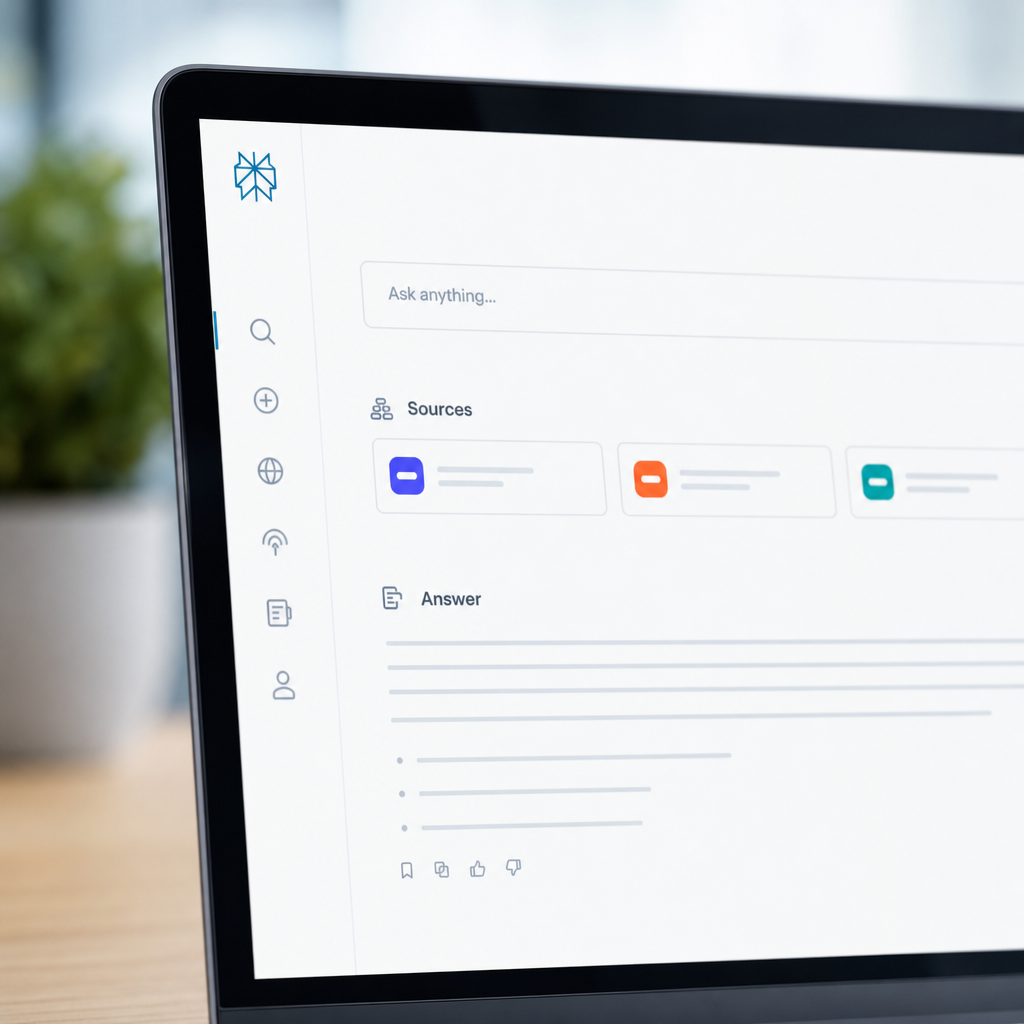
Perplexity operates differently than Google or Bing. It doesn't just rank pages — it retrieves, summarizes, and synthesizes information from a curated set of sources in real time, then generates a natural-language answer with inline citations. Understanding this retrieval process is the foundation of any optimization strategy.
Perplexity's pipeline generally involves:
- Query interpretation — breaking down the user's natural language question into intent and sub-intents.
- Retrieval — pulling candidate documents from its index (built partly on web crawling and partly on real-time search APIs).
- Relevance scoring — evaluating which passages most directly and clearly answer the query.
- Synthesis — generating a coherent answer using an LLM, while attributing specific claims to specific sources.
- Citation display — showing numbered references that link back to the original pages.
This means Perplexity rewards content that is directly extractable — meaning a passage can be lifted almost verbatim to answer a question without requiring additional interpretation. According to Search Engine Land, answer engines increasingly prioritize content structured for extraction over content optimized purely for keyword density.
Unlike traditional SEO, where backlinks and domain authority dominate ranking factors, generative engines like Perplexity place heavier weight on:
- Content clarity and directness
- Topical authority and freshness
- Structured data and semantic markup
- Passage-level relevance rather than whole-page relevance
This is the essence of Generative Engine Optimization (GEO) — a discipline that platforms like frontrank.com have built entire toolsets around, since GEO requires different tactics than classic SEO.
Why Traditional SEO Alone Isn't Enough
Many marketers assume that if a page ranks well on Google, it will automatically appear in Perplexity answers. This is only partially true. Perplexity does use some overlapping signals — domain trust, backlink profiles, and page speed all still matter — but it also applies its own retrieval logic that favors different content characteristics.
Here's a comparison of ranking priorities between traditional SEO and Perplexity-style GEO:
| Factor | Traditional SEO (Google) | Perplexity AI (GEO) |
|---|---|---|
| Primary goal | Rank a full page | Extract a citable passage |
| Content format | Long-form, keyword-optimized | Structured, direct-answer blocks |
| Authority signal | Backlinks + domain age | Topical depth + citation-worthy facts |
| Freshness | Matters, but less urgent | Highly weighted for trending queries |
| Ideal content length | Often 1,500+ words | Concise, scoped answers within longer pages |
| Structured data | Helps CTR, not core ranking | Assists parsing and entity recognition |
| User intent match | Broad intent matching | Precise question-answer matching |
The takeaway: you need both. A technically sound SEO foundation is necessary, but you must layer GEO-specific formatting on top to be picked up by Perplexity's synthesis engine. Research from Backlinko on AI Overviews and generative search shows that pages combining structured schema markup with clear question-based headers receive disproportionately higher citation rates.
Structuring Content for Maximum Extractability
The single highest-leverage tactic for appearing in Perplexity answers is structuring your content so that a specific paragraph or sentence can stand alone as a complete answer. This is sometimes called "answer-first writing" or "inverted pyramid" content structure.
Key structural techniques:
- Lead with the answer. Place the direct answer to a likely query in the first 1-2 sentences of a section, then elaborate afterward.
- Use question-based subheadings. Headers like "What is Generative Engine Optimization?" mirror how users phrase queries in Perplexity.
- Keep answer paragraphs under 60 words. Shorter, self-contained passages are easier for LLMs to extract cleanly.
- Use numbered and bulleted lists for processes, comparisons, and criteria — these are heavily favored in synthesis because they're already pre-structured.
- Include definitions early. Perplexity frequently cites glossary-style definitions verbatim.
- Avoid buried key facts. Don't hide statistics or core claims in the middle of long paragraphs.
Here's a simple before-and-after example:
Before (buried answer): "There are many factors that go into how AI models decide what to cite, and while it can be complex, generally speaking, one of the more important things tends to be how clearly a passage answers a specific question."
After (extractable answer): "Perplexity prioritizes passages that directly and clearly answer a specific question, rather than paragraphs with buried or ambiguous claims."
This kind of rewriting is exactly the type of optimization that automated platforms like frontrank.com apply at scale — restructuring and publishing AI- and SEO-optimized articles designed specifically to be extraction-friendly for models like Perplexity, ChatGPT, and Claude.
Technical and On-Page Factors That Influence Citation
Beyond content structure, several technical factors influence whether Perplexity's crawlers can access, parse, and trust your content.
Crawlability and Indexing
Perplexity uses its own crawler (PerplexityBot) in addition to licensed data and real-time search APIs. If your robots.txt blocks this crawler, you cannot appear in citations regardless of content quality. Verify your crawl settings and confirm PerplexityBot is allowed, similar to how you would check for Googlebot access. The Perplexity documentation outlines crawler behavior and citation mechanics in more detail.
Structured Data Markup
While Perplexity doesn't rely on schema.org markup the way Google does for rich results, structured data still helps disambiguate entities, dates, authorship, and organizational context — all of which feed into trust scoring. Recommended schema types include:
ArticleorBlogPostingFAQPageOrganizationPerson(for author E-E-A-T signals)BreadcrumbList
Page Speed and Core Web Vitals
Slow-loading pages are less likely to be fully crawled and indexed in real time. Google's Core Web Vitals guidelines remain a useful benchmark even for AI crawlers, since many indexing pipelines share infrastructure or heuristics with traditional search crawlers.
HTTPS, Mobile Responsiveness, and Clean HTML
Clean semantic HTML (proper use of <h1>–<h3>, <p>, <ul>, <table>) makes it significantly easier for retrieval systems to parse content blocks accurately. Poorly nested or div-heavy markup can obscure otherwise excellent content.
Content Types That Perform Best in Perplexity Citations
Not all content formats have equal citation potential. Based on observed patterns across GEO case studies, certain formats consistently outperform others in generative answer engines.
| Content Type | Citation Likelihood | Why It Works |
|---|---|---|
| Definitional/glossary content | High | Directly matches "what is X" queries |
| Statistical roundups & data | High | LLMs favor citable numbers with sources |
| Step-by-step how-to guides | High | Matches procedural query intent |
| Comparison tables | Medium-High | Structured data is easy to extract |
| Opinion/thought leadership | Low-Medium | Harder to verify as factual claims |
| Long-form narrative content | Low | Difficult to extract discrete passages |
| News and fresh updates | High (time-sensitive) | Recency signals boost citation for trending topics |
To maximize your chances, prioritize creating:
- Definition pages that clearly answer "What is [topic]?"
- Original data and statistics with clear sourcing and dates.
- Step-by-step guides using numbered lists (like this article).
- Comparison tables pitting your solution or topic against alternatives.
- FAQ sections addressing long-tail question variants.
This is precisely the content mix that automated GEO platforms are built to produce daily. FrontRank, for instance, publishes daily AI-generated articles specifically structured around these high-citation formats, pairing them with backlinks to reinforce topical authority signals across a domain.
Building Topical Authority and Entity Recognition
Perplexity, like other LLM-based systems, relies heavily on entity recognition — understanding what your brand, product, or website is and what topics it's authoritative on. This is closely tied to how consistently your brand appears across the web in connection with specific topics.
Steps to strengthen entity authority:
- Publish consistently on a narrow topical cluster rather than broad, unrelated topics.
- Use consistent naming and branding across your site, social profiles, and third-party mentions.
- Earn citations from authoritative third-party sites, including industry publications, forums, and review sites.
- Maintain an active knowledge base or blog that continually reinforces your topical footprint.
- Get listed in structured directories and databases relevant to your industry.
According to Moz's research on E-E-A-T signals, experience, expertise, authority, and trust are increasingly interpreted by algorithms — including generative ones — through consistent third-party validation rather than self-declared claims. This means backlinks still matter, not for classic PageRank purposes, but as a trust and validation signal for LLM training and retrieval systems.
Tools that combine backlink exchange with AI visibility auditing — like those offered on frontrank.com — can help identify which topical gaps in your backlink profile are weakening your entity recognition in AI systems, and address them systematically rather than through manual outreach.
Measuring and Auditing Your AI Visibility
Once you've optimized content structurally and technically, you need a way to measure whether it's actually working. Unlike traditional rank tracking, AI visibility auditing requires a different measurement approach since there's no fixed "position 1-10" concept.
Key metrics to track:
- Citation frequency — how often your domain appears as a cited source across a sample set of relevant queries.
- Query coverage — the breadth of question variants where your content gets surfaced.
- Answer share — the percentage of the generated answer text attributable to your source versus competitors.
- Freshness responsiveness — how quickly new content you publish starts appearing in citations.
- Cross-model consistency — whether you're cited similarly across Perplexity, ChatGPT browsing, Gemini, and Claude.
Manual auditing process:
- Compile a list of 20-50 target queries relevant to your niche.
- Run each query through Perplexity and log which domains are cited.
- Note patterns: content format, length, structure, and freshness of cited pages.
- Compare your own citation rate against top competitors.
- Repeat monthly to track trend direction.
This manual process is time-consuming at scale, which is why automated AI visibility auditing tools have emerged. Platforms like frontrank.com integrate this auditing directly into their publishing workflow, continuously tracking citation performance across AI models and adjusting content recommendations accordingly — removing the need for marketers to run manual query audits every month.

Common Mistakes That Prevent Citation
Even well-intentioned optimization efforts often fail because of a handful of recurring mistakes. Avoid these pitfalls:
- Keyword stuffing legacy habits. Perplexity's synthesis models penalize unnatural phrasing that reduces extractability, even if it once helped with classic SEO.
- Ignoring crawler access. Blocking AI crawlers via
robots.txtwhile expecting citations is a direct contradiction. - Publishing without clear authorship or dates. Trust signals like author bios and publish dates matter for E-E-A-T-style evaluation.
- Overly promotional language. Answer engines tend to favor neutral, factual tone over sales-oriented copy.
- Thin or duplicate content. Recycled content across many domains reduces uniqueness scores and citation potential.
- No structured comparison or data content. Pure narrative blog posts without tables, lists, or stats are less extractable.
- Infrequent publishing. Static websites lose freshness signals over time compared to consistently updated competitors.
Avoiding these issues requires ongoing content operations — something that's difficult to sustain manually, especially for small teams. This is why automation-first platforms have gained traction among marketers seeking consistent AI visibility without dedicating in-house resources to daily publishing.
Building a Sustainable Perplexity Optimization Workflow
To appear consistently in Perplexity answers, one-off optimization isn't enough. You need an ongoing content and technical workflow that treats GEO as a continuous process rather than a project with an end date.
A sustainable workflow includes:
- Keyword and query research focused on question-based, long-tail phrasing.
- Content creation structured around answer-first writing, tables, and lists.
- Technical audits to confirm crawler access and clean markup.
- Backlink development to reinforce topical authority signals.
- Citation tracking across multiple AI models, not just Perplexity.
- Iteration based on which content formats and topics are gaining citation traction.
Because this cycle repeats indefinitely, many organizations are shifting toward automated systems that handle keyword research, content publishing, backlink exchange, and visibility auditing in a single integrated workflow. FrontRank was built around exactly this need — automatically publishing daily SEO- and GEO-optimized articles with backlinks, and integrating directly with platforms like WordPress, Wix, Webflow, and Shopify so that businesses don't need to manually write or manage this content pipeline themselves.
Conclusion
Appearing in Perplexity AI answers requires a deliberate shift away from purely traditional SEO thinking and toward content built for extractability, topical authority, and technical accessibility. By structuring content with answer-first writing, question-based headers, comparison tables, and clean semantic markup — while also ensuring crawler access and consistent publishing cadence — websites can meaningfully improve their citation frequency across Perplexity and other generative answer engines. Given how fast this space is evolving, ongoing auditing and adaptation matter just as much as the initial optimization work.
For businesses that don't have the bandwidth to manage this process manually, frontrank.com offers an integrated solution: daily AI-generated, GEO-optimized articles with backlinks, keyword research, backlink exchange, and AI visibility auditing — all designed to help websites get cited more consistently by Perplexity, ChatGPT, Claude, and Gemini without the manual overhead of building and maintaining this workflow in-house.
Article written by FrontRank